Best Printing Tips from Print Signs Quick
72 DPI vs. 300 DPI: Why Resolution Matters in Print
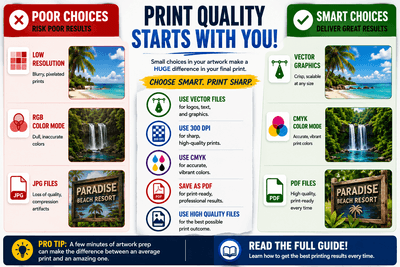
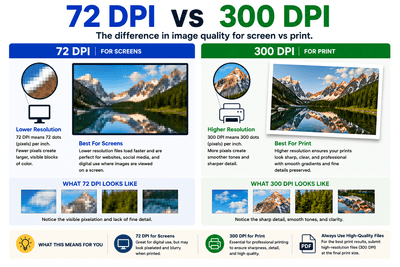
One of the biggest mistakes people make when preparing artwork for print is assuming that if an image looks good on a screen, it will automatically print clearly at a large size. A file that appears perfectly sharp on a phone, social media post, or website can quickly become blurry, pixelated, or soft once it is enlarged for printing. That is where DPI comes in.
RGB vs. CMYK: Why Printed Colors Look Different Than Your Screen
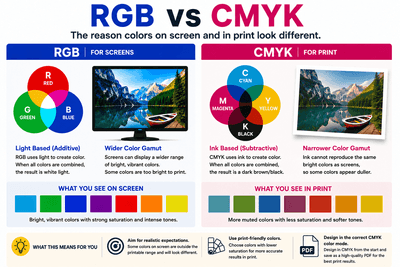
Screens use RGB color, which stands for Red, Green, and Blue. Phones, tablets, TVs, and computer monitors create color using light. Because screens are backlit, colors often appear brighter, more vibrant, and more saturated. Printing uses CMYK, which stands for Cyan, Magenta, Yellow, and Black. Instead of using light, printers create color using ink on a physical material. Printed graphics rely on surrounding light to reflect color back to your eyes.


How to Create, Edit and Upload Your Artwork
A step by step guide to creating, editing and uploading your image or artwork file to printsignsquick.com! Starting from scratch? We'll walk you through our free online Design Tool! Need to adjust size or resolution on an image? Or create a cut line for a custom shape? We're explain the how and why! Do you have artwork ready to go? We'll give you a few options to get your artwork right to our printers as quick as possible!

Rush Production and Expedited Shipping
In today's dynamic and fast-paced business environment, the ability to meet tight deadlines and fulfill urgent requests is more important than ever. When it comes to custom printed signage, having rush production and expedited options available can make all the difference in successfully promoting your brand, event, or message.


The Importance of High-Resolution Images
High resolution, in the context of prints and images, refers to the level of detail and clarity an image possesses. It is typically measured in pixels per inch (PPI) for digital images or dots per inch (DPI) for printed materials. The higher the PPI or DPI, the more pixels or dots are packed into every square inch of the image, resulting in greater detail, smoother gradients, and sharper edges.

A Graphic Designer's Guide to Quality, Speed, and Efficiency
Graphic designers require a dependable printing partner that offers high-quality materials, keeps pace with industry trends, and ensures rapid delivery across the U.S. From small marketing magnets to expansive vinyl billboard banners, the right printer helps designers meet diverse client needs efficiently, especially under tight deadlines.

Which Vinyl Decal is Right for You?
Discover the pros and cons of standard, clear, removable, air release, and perforated vinyl decals. Find out which type of vinyl decal is right for your needs and learn how to make an informed decision when it comes to selecting the perfect vinyl decal for your project.


AprilTags: The Versatile Tool in Robotics and Beyond
In the expanding world of robotics and computer vision, AprilTags play a crucial role as a simple yet powerful tool for a variety of applications. These two-dimensional barcodes are designed for quick recognition, making them ideal for tasks in robotics, motion tracking, and environmental interaction.


DPI vs. PPI: What's the Real Difference and Why It Matters
Discover the key differences between DPI and PPI in our comprehensive guide. Understand how these two terms impact image quality and which one to focus on for better results. Improve your digital imaging skills and optimize your images for print or web with our expert insights.